
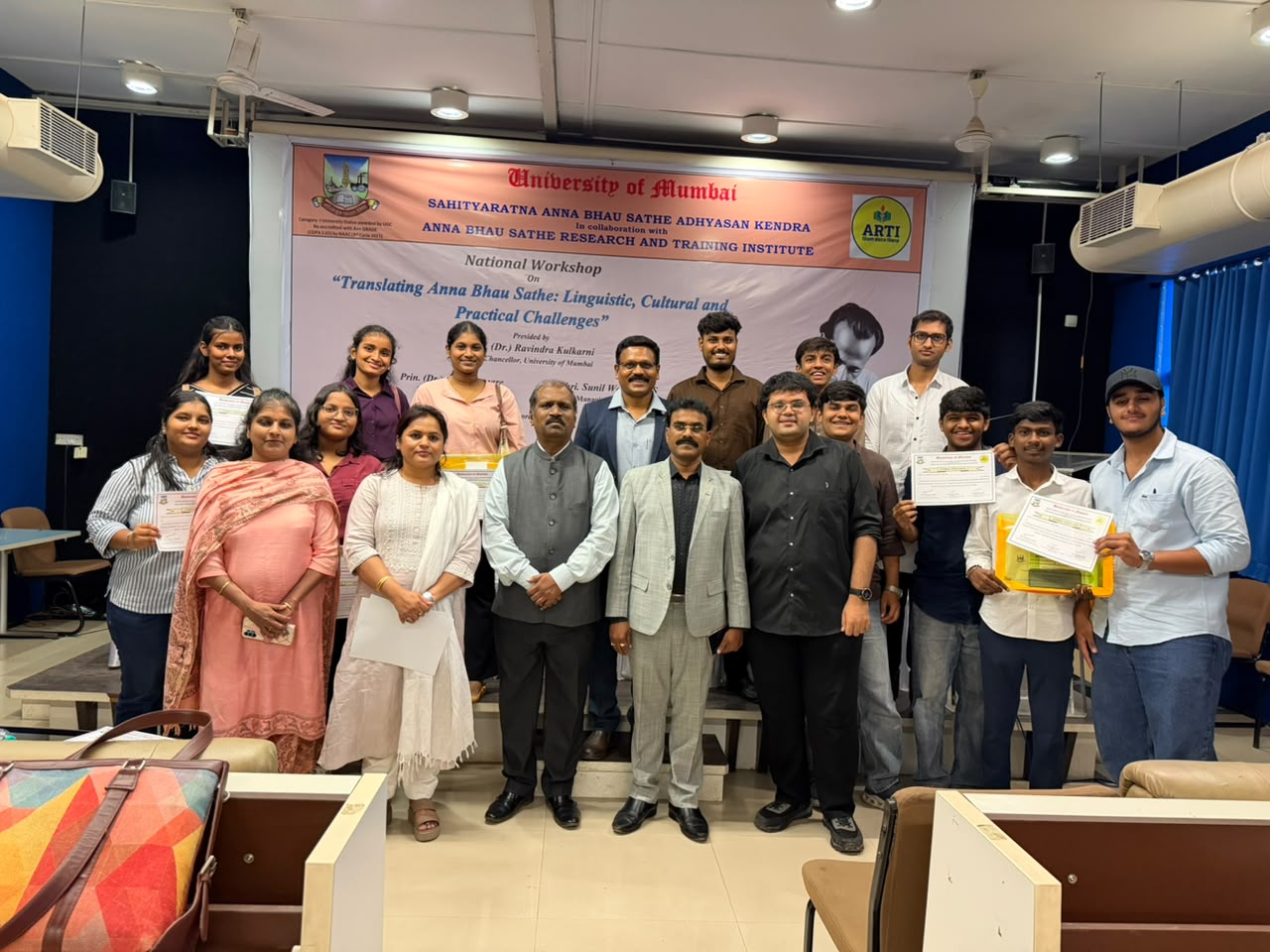
Hinduja College Students Explore Translating Anna Bhau Sathe
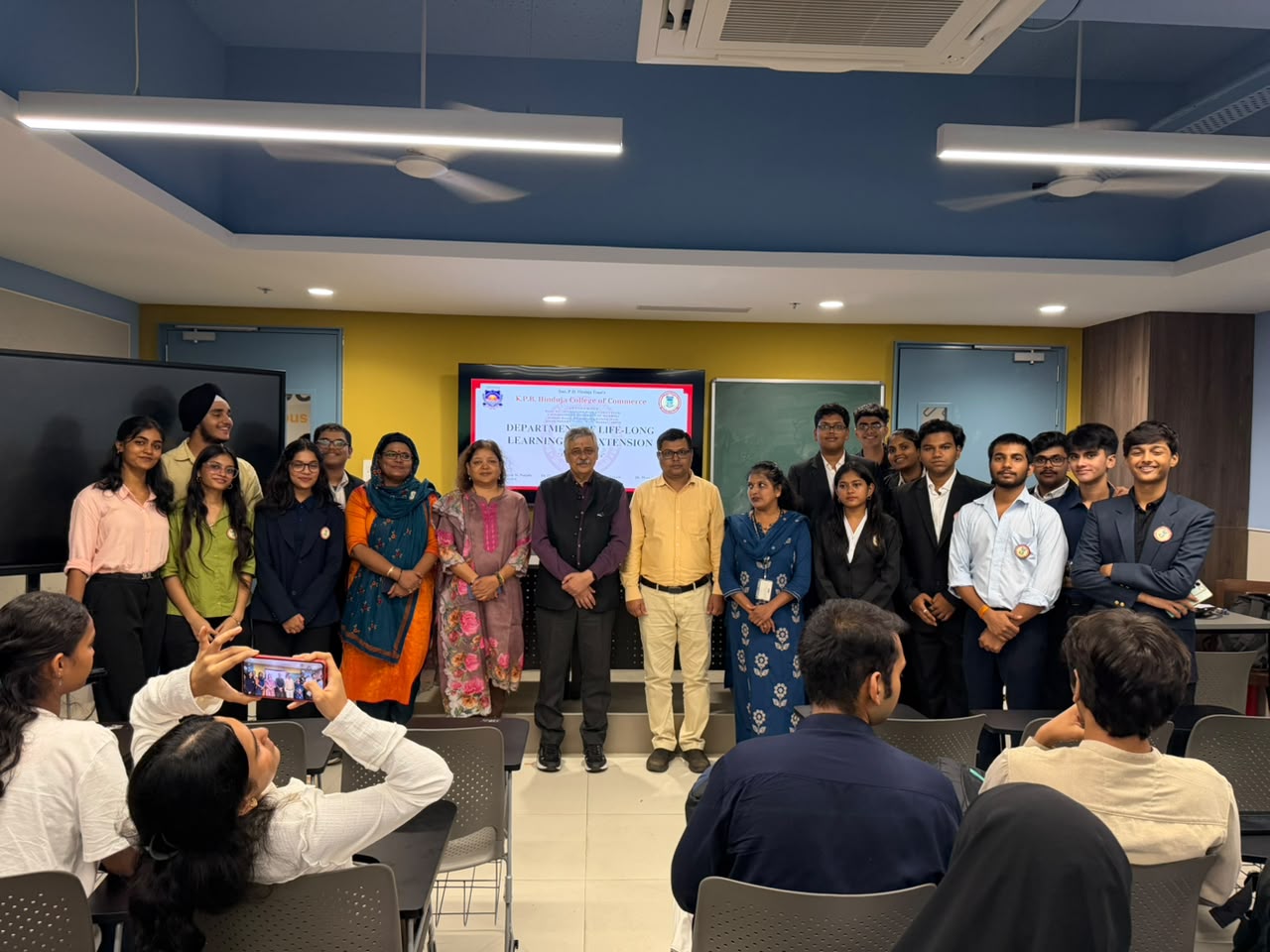
Some writers carry so much cultural weight that translating their work becomes an act of preservation as much as language. That was the central idea explored when our DLLE Unit sent student delegates to a National Level Workshop on “Translating Anna Bhau Sathe: Linguistic, Cultural, and Practical Challenges,” held on 24th August 2026 at the Nano Technology Auditorium, University of Mumbai, Vidyanagari Campus, Kalina.
Stepping Into a Writer’s World
Organised by the Department of Lifelong Learning and Extension at the University of Mumbai, the workshop gave our students a deep dive into the literary and cultural contributions of Anna Bhau Sathe, a writer whose work carries significant social and regional weight in Maharashtra’s literary tradition. For students more used to analysing texts from a distance, this was a chance to engage with the practical realities of bringing that work to new audiences.
Why Translation Is Harder Than It Looks
A major thread running through the workshop was just how much is at stake when translating literature, not just finding equivalent words, but preserving original meaning, emotion, social context and cultural identity. Those elements don’t always survive a straightforward word-for-word translation, and the sessions pushed students to think critically about what gets lost, and what has to be deliberately protected, in that process.
Opening Regional Literature to Wider Audiences
The discussions also explored the bigger picture: how thoughtful translation can carry regional literature far beyond its original readership, without diluting what makes it culturally significant. For students, this raised an important question that goes beyond any single author, how do you make literature accessible to new audiences while staying true to the voice and context it came from?
Building a Broader Literary Perspective
Through expert-led sessions, students gained real insight into the linguistic and cultural challenges that come with translating regional literature specifically, work rooted deeply in local identity, dialect and social experience. That exposure helped participants build a more nuanced appreciation for how language, culture and storytelling intersect, a perspective that extends well beyond any single workshop or writer.
More Than Just an Academic Exercise
What made the experience valuable wasn’t only the subject matter, it was the chance to engage directly with literary and social themes through expert discussion, rather than secondhand through a textbook. Students left with a stronger appreciation for cultural diversity and a sharper understanding of what meaningful cross-cultural communication actually requires.
A Meaningful Addition to Student Learning
Workshops like this one reflect exactly the kind of academic exposure our DLLE Unit values: opportunities that stretch students’ thinking beyond their immediate coursework and into broader cultural and literary conversations. For the delegates who attended, this was time well spent, an enriching, thought-provoking experience that deepened their understanding of literature, language and the cultural work that connects them.
Want to see more from Hinduja College’s DLLE initiatives? Visit Hinduja College to see what’s next.