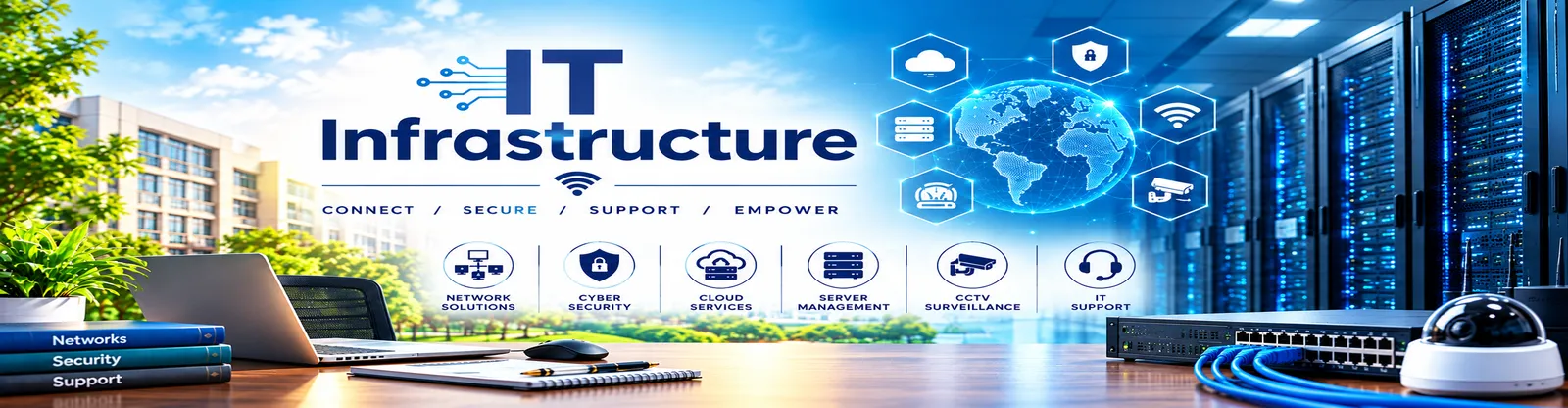
K.P.B. Hinduja College of Commerce has embraced technology as a strategic enabler of academic excellence, administrative efficiency, student services, institutional communication, security, transparency, and professional development.

The College has progressively developed a comprehensive ICT ecosystem that extends beyond conventional computer laboratories. From high-performance computing and campus-wide Wi-Fi to ERP-based administration, biometric attendance, IP telephony, digital examination infrastructure, dedicated server facilities, online learning, virtual guest lectures, and comprehensive CCTV surveillance, technology has been integrated into several aspects of institutional functioning.

Our Objective

To provide students, faculty and staff with reliable, accessible, secure and modern technology that makes learning, communication and institutional work more efficient.

Explore IT Facilities

Digital Campus

A Connected, Smart and Future-Ready Campus

K.P.B. Hinduja College of Commerce is developing a digitally connected campus where technology supports teaching, learning, administration, communication, security and student services.

The College's digital ecosystem includes:

  • Three state-of-the-art computer laboratories.
  • Approximately 250 computer systems across the campus.
  • 150 laptops provided to staff members for flexible and efficient work.
  • Campus-wide Wi-Fi connectivity.
  • 75-inch interactive touch panels in classrooms.
  • 85-inch interactive panels in computer laboratories.
  • Dedicated server room.
  • Enterprise Resource Planning (ERP) system.
  • IP-based telephone system with 100 hunting lines.
  • Biometric attendance system.
  • High-speed document scanners.
  • Digitized examination infrastructure.
  • Online learning and virtual lecture facilities.
  • Online certificate and short-term programmes.
  • Online counselling provisions.
  • Online training for students, faculty and non-teaching staff.
  • More than 150 CCTV cameras.
  • Dedicated technical support team.
  • Structured technical maintenance and support.

This integrated infrastructure enables the College to provide a technology-enabled environment that supports both academic and administrative excellence.

Computer Infrastructure

Approximately 250 Computer Systems Across the Campus

The College has approximately 250 computer systems deployed across various academic and administrative areas for use by students, faculty and staff.

These systems support day-to-day institutional activities including:

  • Teaching and learning.
  • Practical sessions.
  • Academic projects.
  • Research and documentation.
  • Administrative work.
  • Student services.
  • Examination-related activities.
  • Digital communication.
  • Online learning.
  • Presentations and demonstrations.

The availability of computing infrastructure across the campus ensures that technology remains accessible to the College community for academic and operational requirements.

State-of-the-Art Computer Laboratories

Three Advanced Computer Laboratories

The College has three state-of-the-art computer laboratories equipped with modern computing infrastructure.

The laboratories feature:

  • Intel Core i7 computer systems.
  • 16 GB RAM.
  • 15-inch monitors.
  • Compact Tiny CPU systems.
  • High-speed network connectivity.
  • Internet connectivity.
  • 85-inch interactive panels.

The use of compact Tiny CPU systems allows efficient utilization of laboratory space and provides a clean, organized and modern workstation environment.

Laboratories Support:

  • Practical classes.
  • Computer-based learning.
  • Software applications.
  • Project work.
  • Presentations.
  • Digital assignments.
  • Research activities.
  • Online academic activities.
  • Skill development.

Staff Laptop Initiative

150 Laptops for Faculty & Staff

As part of its commitment to improving staff productivity and promoting flexible digital working, the College has provided 150 laptops to staff members.

This initiative enables faculty and staff to carry out their professional responsibilities more efficiently, whether they are working in classrooms, laboratories, offices, meetings, training sessions, seminars or other institutional activities.

Benefits of the Laptop Initiative. The provision of laptops supports:

  • Mobile and flexible working.
  • Digital documentation.
  • Online meetings.
  • Presentations.
  • Academic preparation.
  • Research activities.
  • Digital communication.
  • Online training.
  • Administrative work.
  • Access to ERP and institutional systems.
  • Creation and management of digital resources.

This initiative reflects the Management's commitment to empowering faculty and staff with the technology required to perform their responsibilities effectively.

Smart Classrooms

Interactive Digital Learning Environment

The College has equipped classrooms with 75-inch interactive touch panels, transforming conventional classrooms into modern technology-enabled learning spaces.

Faculty members can use these panels for:

  • Presentations.
  • Multimedia teaching.
  • Digital annotations.
  • Online resources.
  • Educational videos.
  • Interactive demonstrations.
  • Student presentations.
  • Collaborative learning.

The interactive classroom environment encourages greater participation and enables faculty members to integrate digital resources into their teaching methodology.

Interactive Computer Labs

85-Inch Interactive Panels

The computer laboratories are equipped with 85-inch interactive panels to facilitate large-format visual demonstrations and practical teaching.

These panels are particularly useful for:

  • Software demonstrations.
  • Coding and programming demonstrations.
  • Practical instructions.
  • Online guest lectures.
  • Virtual expert sessions.
  • Student presentations.
  • Project demonstrations.
  • Digital tutorials.

The combination of advanced computers and interactive displays provides students with a comprehensive technology-enabled practical learning environment.

Campus-Wide Wi-Fi

High-Speed Wireless Connectivity

The College campus is Wi-Fi enabled, providing wireless connectivity to students, faculty and staff.

The network supports:

  • Digital learning.
  • Online research.
  • E-learning platforms.
  • Online assignments.
  • Virtual lectures.
  • Online training.
  • Digital communication.
  • Academic presentations.
  • Access to online resources.

Campus-wide connectivity is an important component of the College's digital learning ecosystem.

IP-Based Telephone System

100 Hunting Lines for Efficient Communication

The College has implemented an IP-based telephone system with 100 hunting lines to strengthen institutional communication. The system facilitates efficient communication between departments, offices and institutional units.

Key Benefits:

  • Improved internal communication.
  • Efficient call routing.
  • Better accessibility.
  • Faster departmental coordination.
  • Improved institutional communication.
  • Technology-enabled telephony.
  • More organized communication infrastructure.

The IP telephone system contributes to smoother day-to-day functioning and strengthens communication across the campus.

Dedicated Server Room

Centralized Server Infrastructure

The College has a dedicated server room designed to house and manage the institution's different server systems and critical IT infrastructure. Centralizing server infrastructure provides a structured environment for managing the College's digital systems and institutional applications.

Server Room Supports:

  • Institutional applications.
  • ERP infrastructure.
  • Network services.
  • Data services.
  • Digital systems.
  • Authentication and access services.
  • Institutional IT operations.
  • Centralized technology management.

The dedicated server environment enables the IT team to monitor and maintain critical infrastructure in an organized manner.

Controlled IT Infrastructure. The server room is treated as a controlled technical environment, with access and maintenance managed through appropriate institutional procedures. This contributes to:

  • Better infrastructure management.
  • System reliability.
  • Controlled access.
  • Organized maintenance.
  • Improved IT operations.

ERP – Enterprise Resource Planning

Integrated Digital Management System

The College has implemented an Enterprise Resource Planning (ERP) system to streamline and digitize various academic and administrative processes. The ERP provides multiple modules designed to support the requirements of students, faculty and administrative staff.

Student-Facing Applications. The ERP supports various student-related processes including:

  • Admission-related processes.
  • Student information management.
  • Academic administration.
  • Communication.
  • Institutional services.
  • Other digitally enabled student services.

Staff & Administrative Applications:

The system also supports institutional staff in carrying out various administrative and academic functions.

Benefits of ERP. The ERP helps the College:

  • Reduce dependence on manual processes.
  • Improve data management.
  • Streamline workflows.
  • Improve accessibility of information.
  • Support faster processing.
  • Maintain organized institutional records.
  • Improve coordination between departments.
  • Provide technology-enabled student services.

The ERP represents an important component of the College's on going digital transformation.

Biometric Attendance System

Promoting Punctuality, Accountability & Professional Discipline

The College has implemented a biometric attendance system for staff members and visiting faculty.

The initiative reflects the Management's commitment to strengthening:

Punctuality • Discipline • Accountability • Transparency • Professionalism

The biometric system provides a technology-enabled method of recording attendance and helps maintain accurate attendance records.

Institutional Benefits:

  • Accurate attendance recording.
  • Better monitoring of punctuality.
  • Reduced dependence on manual attendance records.
  • Improved transparency.
  • Better administrative monitoring.
  • Support for professional discipline.
  • Reliable attendance data.

The implementation of biometric attendance demonstrates the Management's proactive approach towards creating a culture of professional responsibility and punctuality.

Digital Document Management

High-Speed Scanning Infrastructure

The College has provided high-speed document scanners to facilitate faster digitization of documents and records. The scanning infrastructure enables staff members to convert physical documents into digital formats efficiently.

Digital Scanning Supports:

  • Digitization of records.
  • Document preservation.
  • Digital documentation.
  • Faster document retrieval.
  • Reduced dependence on physical copies.
  • Electronic record management.
  • Sharing of documents through authorized digital channels.
  • Better organization of institutional records.

The initiative contributes towards the College's broader objective of moving towards efficient, organized and digitally managed documentation.

Digital Examination Infrastructure

Secure & Technology-Enabled Examination Operations

The Examination Department has been significantly digitized to improve efficiency, confidentiality and security in examination-related processes.

The department has dedicated high-capacity printing and reproduction infrastructure, including:

  • Dedicated digital cyclostyle machine.
  • Dedicated photocopy machine.
  • High-speed document reproduction facilities.
  • Secure printing infrastructure.

Secure Examination Printing. The dedicated infrastructure enables examination-related documents and question papers to be processed in a controlled environment. The system supports:

  • Secure printing.
  • Confidential document handling.
  • Controlled reproduction.
  • Faster printing.
  • Efficient examination preparation.
  • Reduced dependency on external printing arrangements.

The digitization of examination processes strengthens the College's commitment to confidentiality, efficiency, accuracy and examination integrity.

Online Learning

Learning Beyond the Physical Classroom

The College uses digital platforms to extend learning beyond the conventional classroom.

Students can participate in:

  • Online lectures.
  • Virtual classes.
  • Online guest lectures.
  • Expert interactions.
  • Webinars.
  • Online workshops.
  • Digital training.
  • Virtual demonstrations.

Online learning enables the College to bring academic experts and learning opportunities to students beyond geographical boundaries.

Online Guest Lectures

Connecting Students with Experts

The College facilitates online guest lectures through platforms such as Zoom, enabling students to interact with academicians, industry professionals, subject experts and other distinguished speakers.

Virtual guest lectures provide students with:

  • Exposure to external expertise.
  • Industry interaction.
  • Contemporary knowledge.
  • Expert perspectives.
  • Opportunities for questions and discussion.
  • Wider academic exposure.

The use of virtual platforms enables the College to expand its academic network and bring experts directly into the classroom.

Online Short-Term & Certificate Programmes

Flexible Skill Development

The College facilitates online short-term programmes and certificate programmes to provide additional learning and skill-development opportunities.

These programmes complement regular academic education and may focus on:

  • Professional skills.
  • Digital skills.
  • Entrepreneurship.
  • Industry-oriented knowledge.
  • Emerging technologies.
  • Career development.
  • Communication and soft skills.
  • Contemporary academic areas.

These programmes promote continuous learning and encourage students to develop competencies beyond the formal curriculum.

Online Counselling

Technology-Enabled Student Support

The College provides provision for online counselling sessions through digital platforms. Online counselling adds flexibility and accessibility to the College's student support mechanism.

It can facilitate:

  • Student guidance.
  • Academic counselling.
  • Career guidance.
  • Mentoring support.
  • Educational planning.
  • Appropriate referrals to institutional support services.

The objective is to ensure that technology can be used to make appropriate student support services more accessible.

Online Training & Professional Development

Continuous Professional Development

The College promotes online training opportunities for all sections of the College community.

Faculty Development

Faculty members can participate in:

  • Faculty development programmes.
  • Online workshops.
  • Digital teaching training.
  • Webinars.
  • Subject-specific training.
  • Technology training.
  • Professional development programmes.

Student Development

Students can participate in:

  • Skill-development programmes.
  • Career training.
  • Digital literacy programmes.
  • Online workshops.
  • Certification programmes.
  • Expert sessions.

Non-Teaching Staff Development

Non-teaching staff can participate in training related to:

  • Digital office systems.
  • ERP usage.
  • ICT applications.
  • Administrative processes.
  • Professional skills.
  • Communication.
  • Technology-enabled services.

The College encourages a culture of continuous learning and professional development across the institution.

Technical Support & ICT Help Desk

Dedicated Technical Support from 7:00 a.m. to 7:00 p.m.

The College maintains a dedicated technical support structure to ensure that its extensive technology infrastructure remains operational and accessible.

The technical team consists of:

  • 5 Qualified IT/Technical Engineers
  • 3 Support Staff

The team is available from 7:00 a.m. to 7:00 p.m. Students, faculty and staff can contact the technical team for assistance with technology-related issues.

Technical Support – Organizational Hierarchy

Structured Technical Responsibility

To ensure accountability and timely resolution of technical issues, responsibilities within the technical team are structured according to a defined hierarchy.

LEVEL 1

IT HEAD / IT ADMINISTRATION

The IT Head provides overall leadership and supervision of the College's ICT infrastructure.

Key Responsibilities

  • Overall ICT planning and governance.
  • IT infrastructure management.
  • Cybersecurity and technology policies.
  • Network and server oversight.
  • ERP and digital system coordination.
  • IT procurement and technology planning.
  • Supervision of technical personnel.
  • Escalation management.
  • Coordination with Management and College authorities.
  • Monitoring system availability and performance.
LEVEL 2

SENIOR / LEAD IT ENGINEER

The Senior/Lead Engineer coordinates day-to-day technical operations and acts as the primary technical escalation point.

Key Responsibilities

  • Supervise daily technical activities.
  • Coordinate engineers.
  • Monitor infrastructure performance.
  • Coordinate server and network maintenance.
  • Review unresolved technical complaints.
  • Assign technical tasks.
  • Monitor completion timelines.
  • Escalate critical issues to the IT Head.
  • Maintain technical documentation.
  • Coordinate major technical interventions.
LEVEL 3

IT / NETWORK ENGINEER

The Engineers are responsible for day-to-day maintenance and technical support across the campus.

Key Responsibilities

  • Computer system troubleshooting.
  • Network troubleshooting.
  • Wi-Fi support.
  • Interactive panel support.
  • Laboratory support.
  • Hardware troubleshooting.
  • Software-related support.
  • Printer and scanner support.
  • ERP-related first-level technical coordination.
  • Online lecture technical support.
  • Digital classroom support.
  • Preventive maintenance.
  • System checks.
  • User support.

Each engineer is assigned defined areas of responsibility to ensure clear accountability and faster resolution of issues.

LEVEL 4

TECHNICAL SUPPORT STAFF

The support staff assists the engineers in routine technical activities and operational requirements.

Responsibilities

  • Basic equipment support.
  • Movement and setup of equipment.
  • Assistance during events.
  • Classroom technical setup.
  • Support during examinations and programmes.
  • Basic troubleshooting assistance.
  • Equipment organization.
  • Coordination with engineers for unresolved issues.

Qualified Technical Team

Professionally Qualified IT Personnel

The College has a dedicated team of qualified technical professionals responsible for maintaining its technology infrastructure.

The technical engineers are professionally qualified, including MBA qualifications in Information Technology, and are assigned defined responsibilities for managing and supporting the College's ICT environment.

Their structured responsibilities cover:

Hardware → Network → Wi-Fi → Server → ERP → Smart Classroom → Computer Labs → Digital Services → User Support

This structured approach helps ensure accountability and timely resolution of technical issues.

Student & Staff Technical Support Process

Simple & Accessible Technical Assistance

Students and staff members can approach the designated technical support team whenever they encounter an issue relating to College-provided ICT facilities.

Step 1

User reports the technical issue to the designated technical support team.

Step 2

The assigned engineer assesses the issue.

Step 3

The issue is resolved at the first level wherever possible.

Step 4

If specialized intervention is required, the issue is escalated to the Senior/Lead Engineer.

Step 5

Critical or infrastructure-level issues are escalated to the IT Head.

Step 6

The issue is monitored until resolution and closure.

This structured escalation mechanism helps ensure that technical complaints are handled systematically and within the prescribed institutional support framework.

Campus Security & CCTV

150+ CCTV Cameras Across the Campus

The College has installed more than 150 CCTV cameras across the campus to strengthen safety and security. The surveillance infrastructure helps monitor important areas and provides an additional layer of security for students, faculty, staff and visitors.

CCTV Supports:

  • Campus monitoring.
  • Entry and exit monitoring.
  • Security management.
  • Incident review.
  • Student safety.
  • Monitoring of strategically important locations.
  • Prevention and deterrence of unauthorized activities.

The extensive CCTV network reflects the College's commitment to providing a safe and secure educational environment.

Green & Space-Efficient Technology

Technology with Environmental Responsibility

The College aims to adopt technology in a manner that supports efficient utilization of institutional resources.

The use of Tiny CPU systems in computer laboratories provides a compact and space-efficient computing solution.

The College also promotes digital documentation through high-speed scanning facilities, reducing unnecessary dependence on physical document handling where digital records are appropriate.

Digital Transformation Supports:

  • Reduced paper dependency.
  • Digital record management.
  • Space-efficient computing.
  • Better laboratory utilization.
  • Efficient documentation.
  • Responsible resource utilization.

Technology for Administration

Digital Transformation of Institutional Operations

Technology has become an important part of the College's administrative functioning.

The combination of ERP, IP telephony, biometric attendance, digital documentation, computing infrastructure, laptops, scanning facilities and network connectivity enables administrative processes to become more organized and efficient.

Digital Administration Includes:

  • ERP-based processes.
  • Digital student records.
  • Staff systems.
  • Biometric attendance.
  • Digital documentation.
  • Electronic communication.
  • IP-based telephony.
  • Scanning and digitization.
  • Computerized administrative work.

The objective is to create a more efficient, transparent and technology-enabled institutional environment.

Technology for Students

Student-Centric Digital Infrastructure

Students benefit from a broad range of technology-enabled facilities across the campus.

Students Have Access To:

  • Modern computer laboratories.
  • Approximately 250 campus computer systems.
  • Campus-wide Wi-Fi.
  • Interactive classrooms.
  • Online learning.
  • Virtual guest lectures.
  • Online short-term programmes.
  • Certificate programmes.
  • Online counselling provisions.
  • Digital training.
  • Technical support.
  • Digital academic resources.

The College aims to make technology an accessible and meaningful part of the student experience.

Technology for Faculty & Staff

Empowering Faculty and Staff

The College recognizes that technology is equally important for faculty and administrative staff. The provision of 150 laptops enables staff members to perform their responsibilities with greater flexibility and efficiency.

Combined with ERP, Wi-Fi, IP telephony, scanners, interactive panels, online training and digital communication facilities, the infrastructure provides faculty and staff with an integrated technology ecosystem.

Staff Technology Ecosystem

Laptop
ERP
Wi-Fi
IP Telephone
Digital Scanning
Interactive Panels
Online Training

Efficient Digital Workplace

Digital Examination Ecosystem

Security, Confidentiality & Efficiency

The College's Examination Department has adopted digital technology to strengthen examination-related operations.

Dedicated equipment includes:

  • Digital cyclostyle machine.
  • Photocopy machine.
  • Computer systems.
  • Digital document processing facilities.
  • Secure printing infrastructure.

The dedicated examination infrastructure supports efficient and controlled preparation of examination materials while maintaining the required level of confidentiality and security.

ICT Infrastructure – At a Glance

Our Technology in Numbers

Infrastructure College Facility
Computer Laboratories 3
Computer Systems Across Campus Approximately 250
Staff Laptops 150
Computer Processor Intel Core i7
Computer RAM 16 GB
Computer Monitor 15-inch
Classroom Interactive Panels 75-inch
Computer Lab Interactive Panels 85-inch
Campus Connectivity Wi-Fi Enabled
IP Telephone System 100 Hunting Lines
Server Infrastructure Dedicated Server Room
ERP Implemented
Staff/Visiting Faculty Attendance Biometric
CCTV Cameras 150+
Technical/Engineering Staff 5
Support Staff 3
Technical Support 7:00 a.m. – 7:00 p.m.
Document Digitization High-Speed Scanners
Examination Printing Dedicated Digital Infrastructure
Online Learning Available
Online Guest Lectures Available
Online Short-Term Programmes Available
Online Certificate Programmes Available
Online Counselling Available as a support provision
Online Training Faculty, Students & Non-Teaching Staff

Digital Transformation Journey

From Conventional Infrastructure to a Smart Campus

K.P.B. Hinduja College of Commerce continues to strengthen its digital infrastructure through planned technology adoption.

Our Digital Ecosystem:

250+ Computing Systems

150 Staff Laptops

3 Advanced Computer Laboratories

Smart Interactive Classrooms

Campus-Wide Wi-Fi

100-Line IP Telephony

Dedicated Server Infrastructure

ERP-Based Digital Processes

Biometric Attendance

Digital Document Management

Digitized Examination Infrastructure

Online Learning & Virtual Guest Lectures

Online Programmes & Certifications

Online Counselling & Training

Dedicated Technical Support

150+ CCTV Cameras

A SMART, SECURE & FUTURE-READY CAMPUS

Our Commitment to Digital Excellence

Technology as an Enabler of Institutional Excellence

At K.P.B. Hinduja College of Commerce, technology is viewed not merely as infrastructure but as an enabler of better education, better administration, better communication, better student services and better institutional governance.

The College is committed to continuously improving its digital ecosystem through:

  • Modern ICT infrastructure.
  • Digital transformation.
  • Technology-enabled teaching.
  • Student-centric digital services.
  • Staff productivity tools.
  • Secure IT infrastructure.
  • Professional technical support.
  • Digital documentation.
  • Online learning.
  • Continuous training.
  • Technology-enabled communication.
  • Campus safety and surveillance.
  • Responsible and efficient technology utilization.

Our Digital Vision

“Empowering Education Through Technology, Innovation, Connectivity and Digital Transformation.”

K.P.B. Hinduja College of Commerce strives to create an environment where technology supports every aspect of the educational journey—from classroom learning and practical education to administration, communication, examinations, professional development, student support and campus safety.

Through continuous innovation and responsible technology adoption, the College is building a smart, connected, secure, efficient, inclusive and future-ready institution.


A Connected, Smart and Future-Ready Campus

K.P.B. Hinduja College of Commerce is developing a digitally connected campus where technology supports teaching, learning, administration, communication, security and student services.

The College's digital ecosystem includes:

  • Three state-of-the-art computer laboratories.
  • Approximately 250 computer systems across the campus.
  • 150 laptops provided to staff members for flexible and efficient work.
  • Campus-wide Wi-Fi connectivity.
  • 75-inch interactive touch panels in classrooms.
  • 85-inch interactive panels in computer laboratories.
  • Dedicated server room.
  • Enterprise Resource Planning (ERP) system.
  • IP-based telephone system with 100 hunting lines.
  • Biometric attendance system.
  • High-speed document scanners.
  • Digitized examination infrastructure.
  • Online learning and virtual lecture facilities.
  • Online certificate and short-term programmes.
  • Online counselling provisions.
  • Online training for students, faculty and non-teaching staff.
  • More than 150 CCTV cameras.
  • Dedicated technical support team.
  • Structured technical maintenance and support.

This integrated infrastructure enables the College to provide a technology-enabled environment that supports both academic and administrative excellence.

Approximately 250 Computer Systems Across the Campus

The College has approximately 250 computer systems deployed across various academic and administrative areas for use by students, faculty and staff.

These systems support day-to-day institutional activities including:

  • Teaching and learning.
  • Practical sessions.
  • Academic projects.
  • Research and documentation.
  • Administrative work.
  • Student services.
  • Examination-related activities.
  • Digital communication.
  • Online learning.
  • Presentations and demonstrations.

The availability of computing infrastructure across the campus ensures that technology remains accessible to the College community for academic and operational requirements.

Three Advanced Computer Laboratories

The College has three state-of-the-art computer laboratories equipped with modern computing infrastructure.

The laboratories feature:

  • Intel Core i7 computer systems.
  • 16 GB RAM.
  • 15-inch monitors.
  • Compact Tiny CPU systems.
  • High-speed network connectivity.
  • Internet connectivity.
  • 85-inch interactive panels.

The use of compact Tiny CPU systems allows efficient utilization of laboratory space and provides a clean, organized and modern workstation environment.

Laboratories Support:

  • Practical classes.
  • Computer-based learning.
  • Software applications.
  • Project work.
  • Presentations.
  • Digital assignments.
  • Research activities.
  • Online academic activities.
  • Skill development.

150 Laptops for Faculty & Staff

As part of its commitment to improving staff productivity and promoting flexible digital working, the College has provided 150 laptops to staff members.

This initiative enables faculty and staff to carry out their professional responsibilities more efficiently, whether they are working in classrooms, laboratories, offices, meetings, training sessions, seminars or other institutional activities.

Benefits of the Laptop Initiative. The provision of laptops supports:

  • Mobile and flexible working.
  • Digital documentation.
  • Online meetings.
  • Presentations.
  • Academic preparation.
  • Research activities.
  • Digital communication.
  • Online training.
  • Administrative work.
  • Access to ERP and institutional systems.
  • Creation and management of digital resources.

This initiative reflects the Management's commitment to empowering faculty and staff with the technology required to perform their responsibilities effectively.

Interactive Digital Learning Environment

The College has equipped classrooms with 75-inch interactive touch panels, transforming conventional classrooms into modern technology-enabled learning spaces.

Faculty members can use these panels for:

  • Presentations.
  • Multimedia teaching.
  • Digital annotations.
  • Online resources.
  • Educational videos.
  • Interactive demonstrations.
  • Student presentations.
  • Collaborative learning.

The interactive classroom environment encourages greater participation and enables faculty members to integrate digital resources into their teaching methodology.

85-Inch Interactive Panels

The computer laboratories are equipped with 85-inch interactive panels to facilitate large-format visual demonstrations and practical teaching.

These panels are particularly useful for:

  • Software demonstrations.
  • Coding and programming demonstrations.
  • Practical instructions.
  • Online guest lectures.
  • Virtual expert sessions.
  • Student presentations.
  • Project demonstrations.
  • Digital tutorials.

The combination of advanced computers and interactive displays provides students with a comprehensive technology-enabled practical learning environment.

High-Speed Wireless Connectivity

The College campus is Wi-Fi enabled, providing wireless connectivity to students, faculty and staff.

The network supports:

  • Digital learning.
  • Online research.
  • E-learning platforms.
  • Online assignments.
  • Virtual lectures.
  • Online training.
  • Digital communication.
  • Academic presentations.
  • Access to online resources.

Campus-wide connectivity is an important component of the College's digital learning ecosystem.

100 Hunting Lines for Efficient Communication

The College has implemented an IP-based telephone system with 100 hunting lines to strengthen institutional communication. The system facilitates efficient communication between departments, offices and institutional units.

Key Benefits:

  • Improved internal communication.
  • Efficient call routing.
  • Better accessibility.
  • Faster departmental coordination.
  • Improved institutional communication.
  • Technology-enabled telephony.
  • More organized communication infrastructure.

The IP telephone system contributes to smoother day-to-day functioning and strengthens communication across the campus.

Centralized Server Infrastructure

The College has a dedicated server room designed to house and manage the institution's different server systems and critical IT infrastructure. Centralizing server infrastructure provides a structured environment for managing the College's digital systems and institutional applications.

Server Room Supports:

  • Institutional applications.
  • ERP infrastructure.
  • Network services.
  • Data services.
  • Digital systems.
  • Authentication and access services.
  • Institutional IT operations.
  • Centralized technology management.

The dedicated server environment enables the IT team to monitor and maintain critical infrastructure in an organized manner.

Controlled IT Infrastructure. The server room is treated as a controlled technical environment, with access and maintenance managed through appropriate institutional procedures. This contributes to:

  • Better infrastructure management.
  • System reliability.
  • Controlled access.
  • Organized maintenance.
  • Improved IT operations.

Integrated Digital Management System

The College has implemented an Enterprise Resource Planning (ERP) system to streamline and digitize various academic and administrative processes. The ERP provides multiple modules designed to support the requirements of students, faculty and administrative staff.

Student-Facing Applications. The ERP supports various student-related processes including:

  • Admission-related processes.
  • Student information management.
  • Academic administration.
  • Communication.
  • Institutional services.
  • Other digitally enabled student services.

Staff & Administrative Applications:

The system also supports institutional staff in carrying out various administrative and academic functions.

Benefits of ERP. The ERP helps the College:

  • Reduce dependence on manual processes.
  • Improve data management.
  • Streamline workflows.
  • Improve accessibility of information.
  • Support faster processing.
  • Maintain organized institutional records.
  • Improve coordination between departments.
  • Provide technology-enabled student services.

The ERP represents an important component of the College's on going digital transformation.

Promoting Punctuality, Accountability & Professional Discipline

The College has implemented a biometric attendance system for staff members and visiting faculty.

The initiative reflects the Management's commitment to strengthening:

Punctuality • Discipline • Accountability • Transparency • Professionalism

The biometric system provides a technology-enabled method of recording attendance and helps maintain accurate attendance records.

Institutional Benefits:

  • Accurate attendance recording.
  • Better monitoring of punctuality.
  • Reduced dependence on manual attendance records.
  • Improved transparency.
  • Better administrative monitoring.
  • Support for professional discipline.
  • Reliable attendance data.

The implementation of biometric attendance demonstrates the Management's proactive approach towards creating a culture of professional responsibility and punctuality.

High-Speed Scanning Infrastructure

The College has provided high-speed document scanners to facilitate faster digitization of documents and records. The scanning infrastructure enables staff members to convert physical documents into digital formats efficiently.

Digital Scanning Supports:

  • Digitization of records.
  • Document preservation.
  • Digital documentation.
  • Faster document retrieval.
  • Reduced dependence on physical copies.
  • Electronic record management.
  • Sharing of documents through authorized digital channels.
  • Better organization of institutional records.

The initiative contributes towards the College's broader objective of moving towards efficient, organized and digitally managed documentation.

Secure & Technology-Enabled Examination Operations

The Examination Department has been significantly digitized to improve efficiency, confidentiality and security in examination-related processes.

The department has dedicated high-capacity printing and reproduction infrastructure, including:

  • Dedicated digital cyclostyle machine.
  • Dedicated photocopy machine.
  • High-speed document reproduction facilities.
  • Secure printing infrastructure.

Secure Examination Printing. The dedicated infrastructure enables examination-related documents and question papers to be processed in a controlled environment. The system supports:

  • Secure printing.
  • Confidential document handling.
  • Controlled reproduction.
  • Faster printing.
  • Efficient examination preparation.
  • Reduced dependency on external printing arrangements.

The digitization of examination processes strengthens the College's commitment to confidentiality, efficiency, accuracy and examination integrity.

Learning Beyond the Physical Classroom

The College uses digital platforms to extend learning beyond the conventional classroom.

Students can participate in:

  • Online lectures.
  • Virtual classes.
  • Online guest lectures.
  • Expert interactions.
  • Webinars.
  • Online workshops.
  • Digital training.
  • Virtual demonstrations.

Online learning enables the College to bring academic experts and learning opportunities to students beyond geographical boundaries.

Connecting Students with Experts

The College facilitates online guest lectures through platforms such as Zoom, enabling students to interact with academicians, industry professionals, subject experts and other distinguished speakers.

Virtual guest lectures provide students with:

  • Exposure to external expertise.
  • Industry interaction.
  • Contemporary knowledge.
  • Expert perspectives.
  • Opportunities for questions and discussion.
  • Wider academic exposure.

The use of virtual platforms enables the College to expand its academic network and bring experts directly into the classroom.

Flexible Skill Development

The College facilitates online short-term programmes and certificate programmes to provide additional learning and skill-development opportunities.

These programmes complement regular academic education and may focus on:

  • Professional skills.
  • Digital skills.
  • Entrepreneurship.
  • Industry-oriented knowledge.
  • Emerging technologies.
  • Career development.
  • Communication and soft skills.
  • Contemporary academic areas.

These programmes promote continuous learning and encourage students to develop competencies beyond the formal curriculum.

Technology-Enabled Student Support

The College provides provision for online counselling sessions through digital platforms. Online counselling adds flexibility and accessibility to the College's student support mechanism.

It can facilitate:

  • Student guidance.
  • Academic counselling.
  • Career guidance.
  • Mentoring support.
  • Educational planning.
  • Appropriate referrals to institutional support services.

The objective is to ensure that technology can be used to make appropriate student support services more accessible.

Continuous Professional Development

The College promotes online training opportunities for all sections of the College community.

Faculty Development

Faculty members can participate in:

  • Faculty development programmes.
  • Online workshops.
  • Digital teaching training.
  • Webinars.
  • Subject-specific training.
  • Technology training.
  • Professional development programmes.

Student Development

Students can participate in:

  • Skill-development programmes.
  • Career training.
  • Digital literacy programmes.
  • Online workshops.
  • Certification programmes.
  • Expert sessions.

Non-Teaching Staff Development

Non-teaching staff can participate in training related to:

  • Digital office systems.
  • ERP usage.
  • ICT applications.
  • Administrative processes.
  • Professional skills.
  • Communication.
  • Technology-enabled services.

The College encourages a culture of continuous learning and professional development across the institution.

Dedicated Technical Support from 7:00 a.m. to 7:00 p.m.

The College maintains a dedicated technical support structure to ensure that its extensive technology infrastructure remains operational and accessible.

The technical team consists of:

  • 5 Qualified IT/Technical Engineers
  • 3 Support Staff

The team is available from 7:00 a.m. to 7:00 p.m. Students, faculty and staff can contact the technical team for assistance with technology-related issues.

Structured Technical Responsibility

To ensure accountability and timely resolution of technical issues, responsibilities within the technical team are structured according to a defined hierarchy.

LEVEL 1

IT HEAD / IT ADMINISTRATION

The IT Head provides overall leadership and supervision of the College's ICT infrastructure.

Key Responsibilities

  • Overall ICT planning and governance.
  • IT infrastructure management.
  • Cybersecurity and technology policies.
  • Network and server oversight.
  • ERP and digital system coordination.
  • IT procurement and technology planning.
  • Supervision of technical personnel.
  • Escalation management.
  • Coordination with Management and College authorities.
  • Monitoring system availability and performance.
LEVEL 2

SENIOR / LEAD IT ENGINEER

The Senior/Lead Engineer coordinates day-to-day technical operations and acts as the primary technical escalation point.

Key Responsibilities

  • Supervise daily technical activities.
  • Coordinate engineers.
  • Monitor infrastructure performance.
  • Coordinate server and network maintenance.
  • Review unresolved technical complaints.
  • Assign technical tasks.
  • Monitor completion timelines.
  • Escalate critical issues to the IT Head.
  • Maintain technical documentation.
  • Coordinate major technical interventions.
LEVEL 3

IT / NETWORK ENGINEER

The Engineers are responsible for day-to-day maintenance and technical support across the campus.

Key Responsibilities

  • Computer system troubleshooting.
  • Network troubleshooting.
  • Wi-Fi support.
  • Interactive panel support.
  • Laboratory support.
  • Hardware troubleshooting.
  • Software-related support.
  • Printer and scanner support.
  • ERP-related first-level technical coordination.
  • Online lecture technical support.
  • Digital classroom support.
  • Preventive maintenance.
  • System checks.
  • User support.

Each engineer is assigned defined areas of responsibility to ensure clear accountability and faster resolution of issues.

LEVEL 4

TECHNICAL SUPPORT STAFF

The support staff assists the engineers in routine technical activities and operational requirements.

Responsibilities

  • Basic equipment support.
  • Movement and setup of equipment.
  • Assistance during events.
  • Classroom technical setup.
  • Support during examinations and programmes.
  • Basic troubleshooting assistance.
  • Equipment organization.
  • Coordination with engineers for unresolved issues.

Professionally Qualified IT Personnel

The College has a dedicated team of qualified technical professionals responsible for maintaining its technology infrastructure.

The technical engineers are professionally qualified, including MBA qualifications in Information Technology, and are assigned defined responsibilities for managing and supporting the College's ICT environment.

Their structured responsibilities cover:

Hardware → Network → Wi-Fi → Server → ERP → Smart Classroom → Computer Labs → Digital Services → User Support

This structured approach helps ensure accountability and timely resolution of technical issues.

Simple & Accessible Technical Assistance

Students and staff members can approach the designated technical support team whenever they encounter an issue relating to College-provided ICT facilities.

Step 1

User reports the technical issue to the designated technical support team.

Step 2

The assigned engineer assesses the issue.

Step 3

The issue is resolved at the first level wherever possible.

Step 4

If specialized intervention is required, the issue is escalated to the Senior/Lead Engineer.

Step 5

Critical or infrastructure-level issues are escalated to the IT Head.

Step 6

The issue is monitored until resolution and closure.

This structured escalation mechanism helps ensure that technical complaints are handled systematically and within the prescribed institutional support framework.

150+ CCTV Cameras Across the Campus

The College has installed more than 150 CCTV cameras across the campus to strengthen safety and security. The surveillance infrastructure helps monitor important areas and provides an additional layer of security for students, faculty, staff and visitors.

CCTV Supports:

  • Campus monitoring.
  • Entry and exit monitoring.
  • Security management.
  • Incident review.
  • Student safety.
  • Monitoring of strategically important locations.
  • Prevention and deterrence of unauthorized activities.

The extensive CCTV network reflects the College's commitment to providing a safe and secure educational environment.

Technology with Environmental Responsibility

The College aims to adopt technology in a manner that supports efficient utilization of institutional resources.

The use of Tiny CPU systems in computer laboratories provides a compact and space-efficient computing solution.

The College also promotes digital documentation through high-speed scanning facilities, reducing unnecessary dependence on physical document handling where digital records are appropriate.

Digital Transformation Supports:

  • Reduced paper dependency.
  • Digital record management.
  • Space-efficient computing.
  • Better laboratory utilization.
  • Efficient documentation.
  • Responsible resource utilization.

Digital Transformation of Institutional Operations

Technology has become an important part of the College's administrative functioning.

The combination of ERP, IP telephony, biometric attendance, digital documentation, computing infrastructure, laptops, scanning facilities and network connectivity enables administrative processes to become more organized and efficient.

Digital Administration Includes:

  • ERP-based processes.
  • Digital student records.
  • Staff systems.
  • Biometric attendance.
  • Digital documentation.
  • Electronic communication.
  • IP-based telephony.
  • Scanning and digitization.
  • Computerized administrative work.

The objective is to create a more efficient, transparent and technology-enabled institutional environment.

Student-Centric Digital Infrastructure

Students benefit from a broad range of technology-enabled facilities across the campus.

Students Have Access To:

  • Modern computer laboratories.
  • Approximately 250 campus computer systems.
  • Campus-wide Wi-Fi.
  • Interactive classrooms.
  • Online learning.
  • Virtual guest lectures.
  • Online short-term programmes.
  • Certificate programmes.
  • Online counselling provisions.
  • Digital training.
  • Technical support.
  • Digital academic resources.

The College aims to make technology an accessible and meaningful part of the student experience.

Empowering Faculty and Staff

The College recognizes that technology is equally important for faculty and administrative staff. The provision of 150 laptops enables staff members to perform their responsibilities with greater flexibility and efficiency.

Combined with ERP, Wi-Fi, IP telephony, scanners, interactive panels, online training and digital communication facilities, the infrastructure provides faculty and staff with an integrated technology ecosystem.

Staff Technology Ecosystem

Laptop
ERP
Wi-Fi
IP Telephone
Digital Scanning
Interactive Panels
Online Training

Efficient Digital Workplace

Security, Confidentiality & Efficiency

The College's Examination Department has adopted digital technology to strengthen examination-related operations.

Dedicated equipment includes:

  • Digital cyclostyle machine.
  • Photocopy machine.
  • Computer systems.
  • Digital document processing facilities.
  • Secure printing infrastructure.

The dedicated examination infrastructure supports efficient and controlled preparation of examination materials while maintaining the required level of confidentiality and security.

Our Technology in Numbers

Infrastructure College Facility
Computer Laboratories 3
Computer Systems Across Campus Approximately 250
Staff Laptops 150
Computer Processor Intel Core i7
Computer RAM 16 GB
Computer Monitor 15-inch
Classroom Interactive Panels 75-inch
Computer Lab Interactive Panels 85-inch
Campus Connectivity Wi-Fi Enabled
IP Telephone System 100 Hunting Lines
Server Infrastructure Dedicated Server Room
ERP Implemented
Staff/Visiting Faculty Attendance Biometric
CCTV Cameras 150+
Technical/Engineering Staff 5
Support Staff 3
Technical Support 7:00 a.m. – 7:00 p.m.
Document Digitization High-Speed Scanners
Examination Printing Dedicated Digital Infrastructure
Online Learning Available
Online Guest Lectures Available
Online Short-Term Programmes Available
Online Certificate Programmes Available
Online Counselling Available as a support provision
Online Training Faculty, Students & Non-Teaching Staff

From Conventional Infrastructure to a Smart Campus

K.P.B. Hinduja College of Commerce continues to strengthen its digital infrastructure through planned technology adoption.

Our Digital Ecosystem:

250+ Computing Systems

150 Staff Laptops

3 Advanced Computer Laboratories

Smart Interactive Classrooms

Campus-Wide Wi-Fi

100-Line IP Telephony

Dedicated Server Infrastructure

ERP-Based Digital Processes

Biometric Attendance

Digital Document Management

Digitized Examination Infrastructure

Online Learning & Virtual Guest Lectures

Online Programmes & Certifications

Online Counselling & Training

Dedicated Technical Support

150+ CCTV Cameras

A SMART, SECURE & FUTURE-READY CAMPUS

Technology as an Enabler of Institutional Excellence

At K.P.B. Hinduja College of Commerce, technology is viewed not merely as infrastructure but as an enabler of better education, better administration, better communication, better student services and better institutional governance.

The College is committed to continuously improving its digital ecosystem through:

  • Modern ICT infrastructure.
  • Digital transformation.
  • Technology-enabled teaching.
  • Student-centric digital services.
  • Staff productivity tools.
  • Secure IT infrastructure.
  • Professional technical support.
  • Digital documentation.
  • Online learning.
  • Continuous training.
  • Technology-enabled communication.
  • Campus safety and surveillance.
  • Responsible and efficient technology utilization.

Our Digital Vision

“Empowering Education Through Technology, Innovation, Connectivity and Digital Transformation.”

K.P.B. Hinduja College of Commerce strives to create an environment where technology supports every aspect of the educational journey—from classroom learning and practical education to administration, communication, examinations, professional development, student support and campus safety.

Through continuous innovation and responsible technology adoption, the College is building a smart, connected, secure, efficient, inclusive and future-ready institution.